Thats okay, no problem. We all start somewhere and its normal to get stuck up on some more difficult techniques. In this section, ill talk a little more about some basic techniques that might even be able help you in the puzzles you are working on now. Ill show you some more tricks for working with pairs and some new tricks on working with triplets. I will only cover classic sudoku techniques but they may help you if you are doing a different variations. some of these might be difficult to follow, feel free to read through this a couple times until you are comfortable with each technique and try them yourself.
Black
White
Still having problems?
Hidden Pair
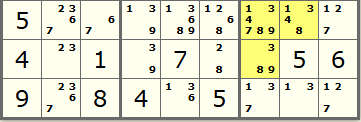
Hidden Pairs are usually much harder to spot. This is because the pair of symbols are covered up by other false candidates. we can see that in this example, 8 and 9 can only go in the highlighted squares, so we can remove our pencil marks for anything else in those cells and in any box, column, or row that those cells share, you can remove 8 and 9
Pointing Pairs/Pointing Triples
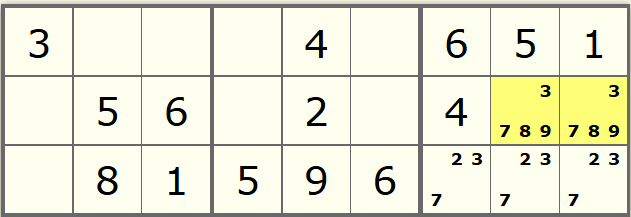
Pointing pairs/triples are useful techniques, Pointing pairs is when two digits are restricted from a row, column, or box because it see's in its row, column or box 2 other cells that must be those digits.
Naked Triple
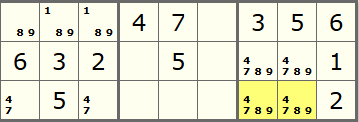
Naked triples occurs when you have three numbers being the only candidate for the same three cells in a row, column, or box.
Hidden Triples
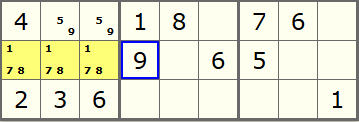
Hidden Triples similarly to Hidden pair, are difficult to spot. This is because a hidden triple is three numbers, that can only go into the same three cells but the cells have other pencil marks in them "Hiding" the triple we are looking for. if you find three digits that can only go into the same three cells you can remove any other pencil mark from those cells.